


When people think of cinema, they often picture movie theaters, film studios, or international film festivals. In Ho Chi Minh City, however, cinema is gradually becoming part of everyday public life, extending beyond traditional venues into parks, schools, and even the city's central streets.
As part of the 2nd Ho Chi Minh City Short Film Festival 2026, two photo exhibitions, "The Glory of Ho Chi Minh City Cinema" and "Highlights of the Ho Chi Minh City Short Film Festival," were organized in front of the Ho Chi Minh City Department of Culture and Sports, attracting significant attention from residents, visitors, and cinema enthusiasts alike. More than simply displaying archival materials, the exhibitions demonstrated a new approach to cultural development: bringing cinema out of specialized venues and making it an integral part of urban life.
1. When Cinema Takes to the Streets
For many years, film-related activities in Vietnam have primarily been held in professional venues such as cinemas, auditoriums, or cultural centers. As a result, cinema has often remained somewhat distant from the general public.
By choosing a public space in the heart of the city for the exhibition, the organizers created a meaningful shift in audience engagement. Passersby could stop to explore photographs documenting the city's cinematic history, landmark productions, and memorable moments from the Short Film Festival—without purchasing a ticket or registering for an event.
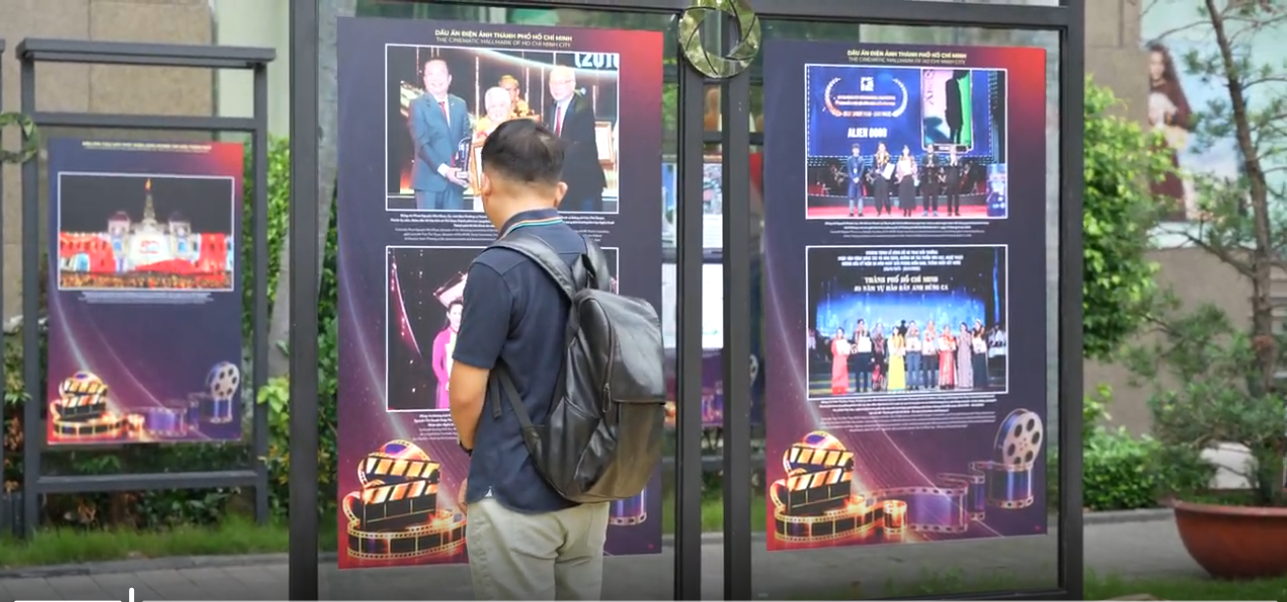
Residents can stop and enjoy the cinematic photo exhibition at any time
From the perspective of urban cultural development, this approach transforms familiar public spaces into creative environments where art naturally becomes part of everyday life.
Cinema, therefore, is no longer merely a form of entertainment but also a medium through which people can interact with, explore, and better understand the cultural identity of the city they call home.
2. From a Photo Exhibition to Building Urban Memory
A creative city is not measured solely by the number of artistic works it produces or the scale of its cultural events. It is equally defined by its ability to preserve and tell its own stories.
The photographs displayed in the exhibition do more than document the achievements of Ho Chi Minh City's film industry. They also reflect the city's evolution across different periods, its social transformations, and the invaluable contributions made by generations of filmmakers and artists to its cultural landscape.
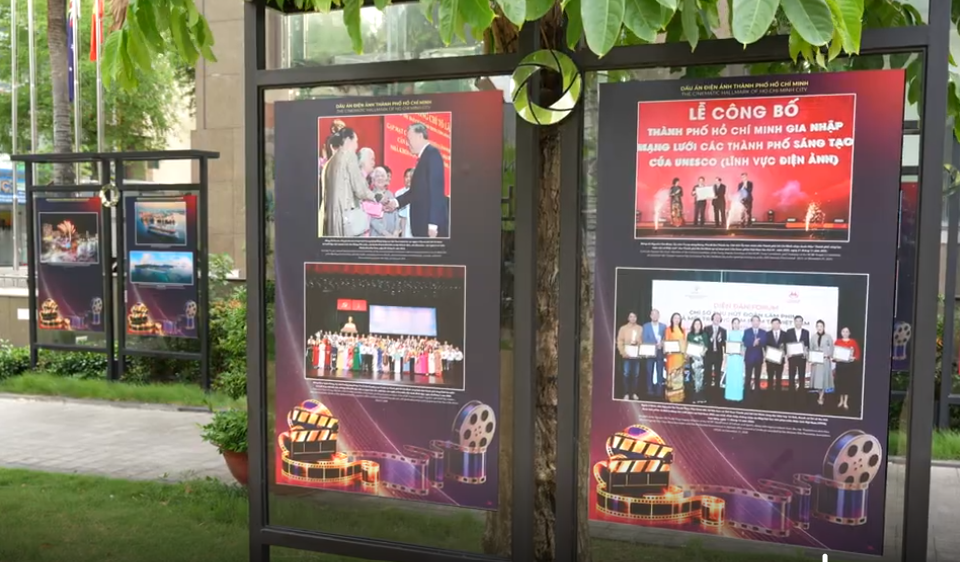
The photographs showcased at the exhibition
Each photograph represents a fragment of the city's collective memory. Displayed in a public space, these memories are no longer confined to archives or specialized collections but are instead shared openly with the wider community.
This reflects the approach adopted by many Creative Cities around the world—transforming historical narratives, artistic achievements, and community stories into shared cultural assets that strengthen civic identity.
3. Cultural Touchpoints in Ho Chi Minh City's Creative City of Film Strategy
The organization of the photo exhibition as part of the Short Film Festival demonstrates Ho Chi Minh City's commitment to fulfilling the objectives it set after joining the UNESCO Creative Cities Network (UCCN) in the field of Film.
Whereas film development strategies traditionally focused on production capacity and talent development, the current direction emphasizes building a comprehensive cinematic ecosystem. Within this ecosystem, audiences are no longer simply viewers but active participants in cultural experiences and creative activities.
Photo exhibitions, outdoor screenings, school film education programs, and community engagement initiatives all serve as cultural touchpoints, bringing cinema closer to society.
The more cultural touchpoints a city creates, the greater the influence of its film culture and the stronger the foundation it builds for future audiences.
4. Public Spaces: The "Soft Infrastructure" of the Cultural Industries
In contemporary cultural industry strategies, public spaces are increasingly regarded as a form of soft infrastructure.
Unlike physical facilities such as cinemas or exhibition halls, public spaces enable artistic activities to reach much broader audiences at relatively low cost while generating significant cultural impact.
For Ho Chi Minh City—a metropolis with a large population and a vibrant cultural scene—leveraging public spaces for film-related activities not only expands access to culture but also reinforces the city's image as an innovative, dynamic, and open creative hub.
This approach also allows cinema to become an essential part of the urban experience, where residents and visitors alike can encounter artistic and cultural activities naturally as they explore the city.
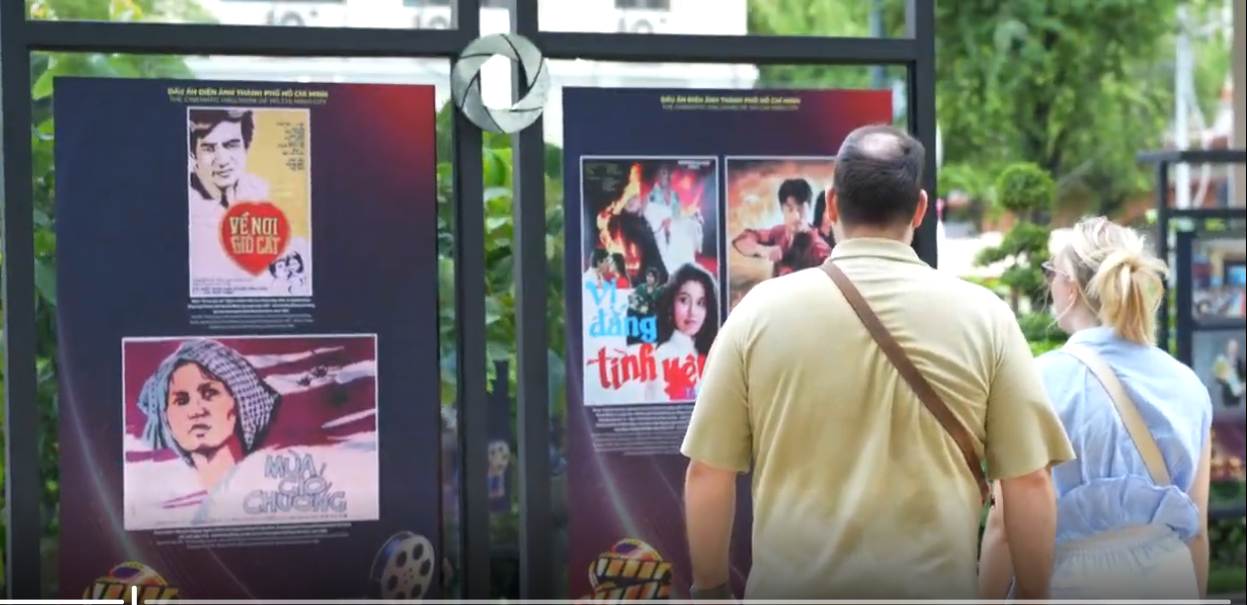
Residents and visitors can experience artistic activities as part of their journey through the city