


On digital platforms, a large number of Vietnamese cinematic works have become victims of copyright infringement in various forms. This alarming reality poses a direct threat to the development of the film industry.
Tổn thất không chỉ doanh thu
According to information from the People’s Army Cinema, recently, numerous websites, online platforms, and individual accounts have unauthorizedly uploaded, broadcast, or screened the feature film “Mưa đỏ” without prior written consent from the People’s Army Cinema / the General Department of Politics of the Vietnam People’s Army.
The People’s Army Cinema affirms that any act of copying, distributing, screening, excerpting, editing, or using the film’s images or audio without permission constitutes a violation of copyright and intellectual property laws.
The feature film “Mưa đỏ” has been illegally copied and distributed on digital platforms.
These acts not only infringe upon the lawful ownership rights of the Ministry of National Defense, but also negatively impact the political, artistic, and humanitarian values of the work; at the same time, they undermine the dedication and efforts of the collective of artists, soldiers, and the creative team who contributed to the film.
In response to this situation, the People’s Army Cinema calls on the film-loving community: do not watch, share, or distribute unauthorized versions of “Mưa đỏ”; join hands to protect intellectual property rights, respect creative values, and preserve the positive image of the People’s Army Cinema.
Previously, just a few hours after its official theatrical release, many scenes from “Mưa đỏ” were secretly recorded and uploaded to platforms such as Facebook, TikTok, and YouTube. Despite poor image quality, these clips still attracted thousands of views due to the film’s popularity. More concerningly, some accounts even split and distributed nearly the entire film content, prompting director Đặng Thái Huyền to speak out: “After 81 days and nights of dedication… blood, sweat, and tears poured onto the set. Please support the crew—do not reveal the plot or share key scenes online…”.
“Mưa đỏ” is not an isolated case. Previously, many Vietnamese films such as “Địa đạo: Mặt trời trong bóng tối”, “Em và Trịnh”, “Bố già”, “Nhà bà Nữ”, “Lật mặt”, and “Hai Phượng” had also been subject to copyright infringement.
Speaking about the reality that many BHD-produced films beloved by audiences have been illegally distributed on piracy websites, BHD CEO Ngô Thị Bích Hạnh expressed her frustration: copyright infringement not only causes severe revenue losses but also discourages filmmakers, gradually eroding their passion for creativity.
Combining legal frameworks, technology, and community awareness
The issue of illegal recording and unauthorized distribution has become a serious challenge for Vietnamese cinema. In a context where box office revenue heavily depends on theater attendance, even a single act of camcording and illegal distribution can cause losses of tens of billions of VND and damage the reputation of producers.
According to the Study on Intellectual Property Rights Enforcement in Cultural and Creative Sectors in Vietnam (SIPE) conducted in 2022, a survey of creative stakeholders shows that the two most infringed sectors are music and audiovisual recordings (accounting for 76.9%) and cinema (71.6%). These are product types that are widely accessible and used by the public for everyday entertainment. The most commonly violated rights include: the right of publication, the right to integrity, the right of reproduction, the right to create derivative works, and moral rights.
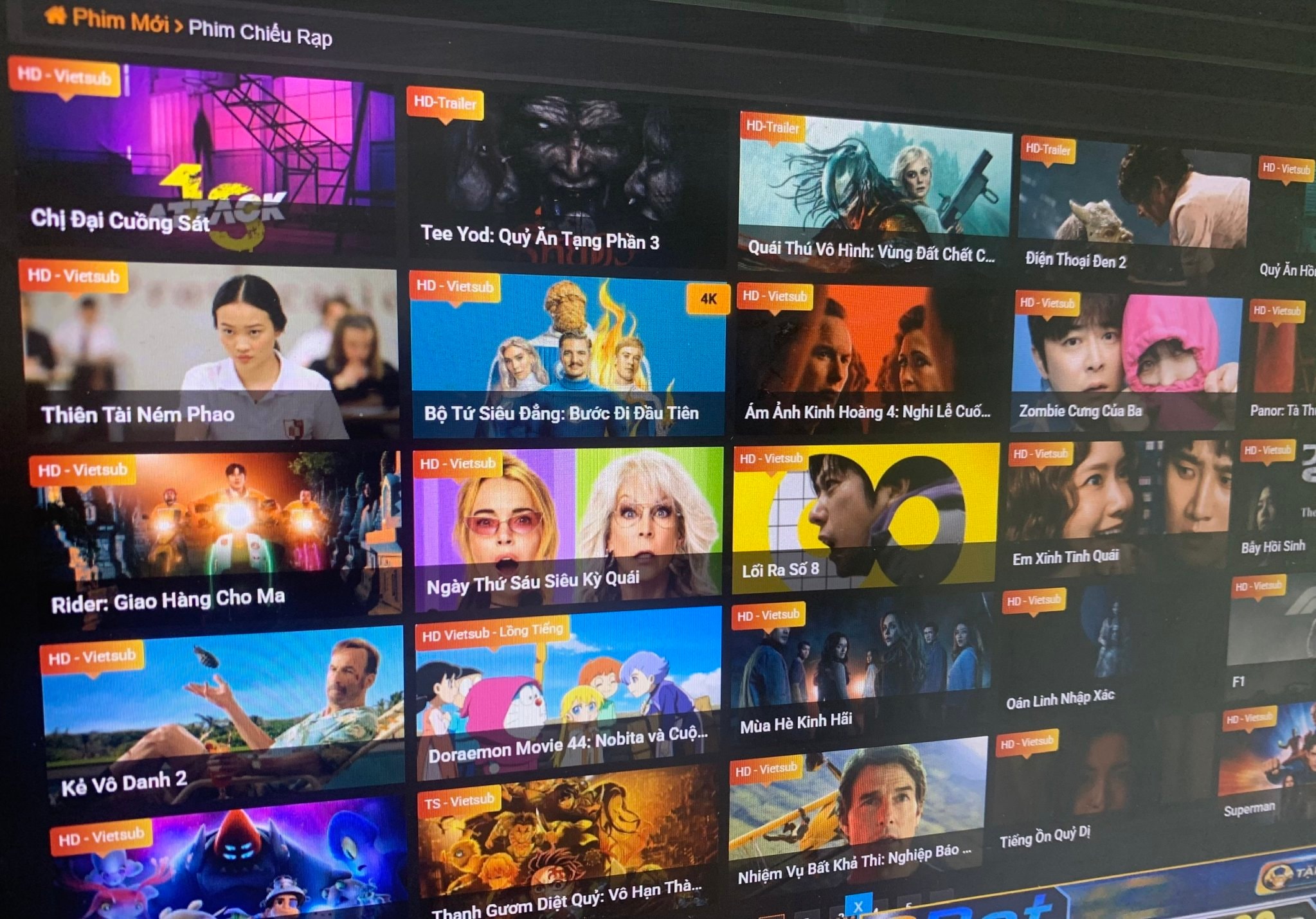
Cinema is one of the sectors most heavily affected by copyright infringement in the digital environment.
The main causes identified include the habit of consuming free cultural products, limited legal awareness, a digital environment that facilitates infringement, and sanctions that are not yet strong enough.
In 2021, authorities initiated criminal proceedings related to the website phimmoi.net. This action was regarded by filmmakers and entertainment companies as an “extremely important milestone” in the fight against copyright infringement. However, after the site was taken down, several new versions quickly reappeared, highlighting the ongoing challenges in controlling and handling violations in the digital space.
The case of FMovies—a platform that illegally provided nearly 50,000 films—being dismantled in mid-2024 also shocked public opinion. In just the first five months of 2024, the site attracted up to 2.4 billion global visits, nearly double that of legitimate platforms such as Disney+ or Prime Video. However, many other websites have continued to emerge, openly streaming pirated content.
Alongside the rapid growth of social media and video-sharing platforms, many individuals and organizations have engaged in disguised film reviews, not only commenting but also summarizing entire plots, using footage, trailers, and voiceovers to retell films. The practice of “reuploading content”—uploading existing films, clips, or videos without authorization—has also become widespread. The primary goal is to generate revenue from views, advertising, or channel sales without incurring production or licensing costs.
In the field of intellectual property protection, Vietnam has established a relatively comprehensive legal framework, meeting the requirements of international conventions and treaties to which the country is a signatory. However, given the increasingly complex situation of copyright infringement in the digital environment, it is necessary to strengthen the application of digital technologies, enhance inspection and enforcement, and promptly handle violations; sanctions must also be sufficiently deterrent and preventive.
Lawyer Phan Vũ Tuấn noted that infringement cases are extremely widespread, taking many forms and constantly evolving. Therefore, the most effective way to combat violations must come from public awareness—specifically, the refusal to consume free or pirated content. Protecting intellectual property must be fully understood and upheld not only by creators but also by the public, who are consumers of cultural and creative products.
Author: NGOC PHUONG
Source: Bảo vệ bản quyền - thách thức sống còn của điện ảnh Việt Nam