


Ho Chi Minh City – a dynamic and creative metropolis that consistently leads in many fields – is once again affirming its pioneering role with the official promulgation of the project “Development of Ho Chi Minh City’s Cultural Industries to 2030.” The objective is not only to develop cultural sectors into a new economic growth driver, but also to build the brand of a “Creative City – Identity – Integration” in the era of globalization.
1. From strategic vision to concrete action
Ho Chi Minh City is one of the first localities nationwide to approve and implement a cultural industry (CI) development project. This is regarded as a strategic move aimed at promoting cultural sectors as a “soft spearhead” of the city’s economy, making tangible contributions to GRDP and creating a sustainable creative environment for citizens, artists, and businesses.
According to data from the Ho Chi Minh City Department of Culture and Sports, the city currently has 17,670 enterprises operating in the cultural sector, accounting for nearly 8% of the total number of enterprises citywide. However, experts note that Ho Chi Minh City’s cultural industry ecosystem still lacks a critical foundation: a well-trained human resource base.
Most artists and young creators today develop from natural talent or learn through practical work experience, while specialized training environments for cultural industries remain limited. As a result, despite its great potential, the cultural industry has yet to fully unleash its inherent strengths.
For this reason, the 2030 project is expected to lay the groundwork for a comprehensive creative cultural ecosystem—one that combines depth with the spirit of the times.
2. Completing infrastructure – a launchpad for creativity
One of the central priorities of the plan is to further develop and strengthen cultural infrastructure, with the aim of creating authentic ‘creative cultural spaces’ that facilitate regular artistic activities, creative practices, and international exchange.
The Ho Chi Minh City People’s Committee has clearly identified the need to supplement large-scale land-use planning to develop cultural complexes, creative industrial zones, and sports economy hubs. These will serve as integrated “creative clusters” that connect enterprises, artists, and designers, encouraging them to collaborate in producing cultural products with high economic value.
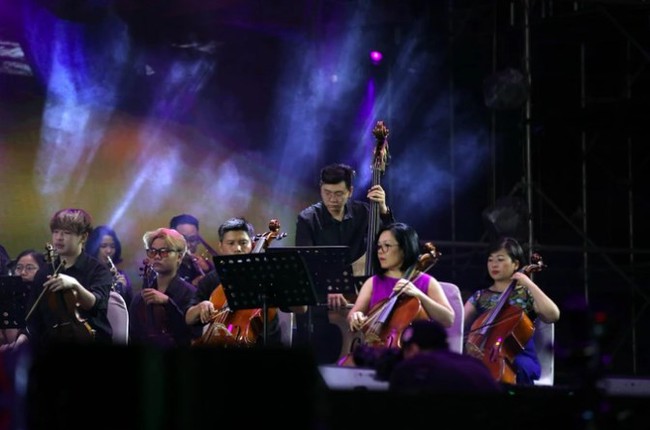
A classical music performance at Nguyen Hue Pedestrian Street during the 3rd Ho Chi Minh City International Music Festival – Hò Dô 2023 created a festive atmosphere that attracted international visitors.
At the same time, the city is making strong investments in education and training for the cultural workforce. The plan includes:
-
- Upgrading the College of Culture and Arts located at 5 Nam Quốc Cang Street (District 1);
-
- Building a new training facility in Thu Duc City, with the long-term goal of upgrading it to a university;
-
- Renewing teaching methods and aligning training programs with the practical needs of the cultural industries.
In addition, vocational schools across the city will be encouraged to open new training programs related to cultural industries, contributing to the development of a young, creative workforce with technological thinking and strong international integration capabilities.
3. Clear Objectives and Measurable Outcomes
According to the plan, Ho Chi Minh City aims for an average annual growth rate of 14% in the cultural industries, targeting VND 53.2 trillion in revenue by 2025, equivalent to approximately 5.7% of the city’s GRDP. Beyond economic indicators, the project also emphasizes the establishment of a Cultural Industries Development Center and a Cultural Industries Startup Fund, providing critical resources to support startups and creative projects in turning ideas into reality.
This initiative is expected to serve as a powerful catalyst for sectors such as design, cinema, music, fine arts, fashion, advertising, video games, and creative gastronomy—so-called “soft economy” industries that are increasingly viewed as new pillars of the city’s sustainable development strategy.
Experts note that in the era of globalization, cities are no longer measured solely by economic growth rates, but also by the depth and vitality of their cultural identity. As the most dynamic and creative urban center in the country, Ho Chi Minh City is gradually shaping new cultural spaces where art, heritage, and technology converge to generate new value.
Sharing this perspective, Nguyen Tien Huy, M.A., Director of Pencil Group, remarked that emerging creative space models not only reflect diverse approaches to arts and culture, but also play a crucial role in nurturing local creative communities, thereby extending their influence regionally and internationally.
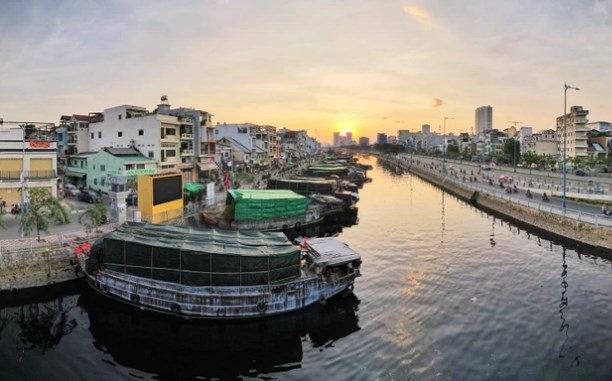
A notable example is the “on-the-wharf, under-the-boat” cultural space in District 8, which has become a unique annual spring flower market within the heart of the city.
Another prominent case is the international promotional campaign “Ho Chi Minh City – A Vibrant City”, produced by the Department of Tourism in collaboration with creative agencies and broadcast on CNN. The project not only promotes tourism, but also vividly conveys the spirit of a city of creativity and global integration.
4. Unlocking Value from Heritage and Community
Alongside modern creative models, Ho Chi Minh City possesses a rich reservoir of traditional cultural resources, ranging from the diverse subcultures of the Chinese, Indian, Khmer, and Cham communities to architectural heritage landmarks such as the Municipal Theatre (Opera House), Notre-Dame Cathedral, and Ben Thanh Market.
These spaces are not merely fragments of urban memory; they serve as “living raw materials” for the cultural industries—spanning tourism, fashion, cinema, and performing arts. When properly harnessed, heritage is not only preserved but also revitalized through the creative perspectives of younger generations.
According to Vuong Quoc Trung, M.A. (Ho Chi Minh City Urban Research and Development Center): “In my view, one of the most important strategies for fostering innovation and creativity in Ho Chi Minh City is to activate cultural spaces. This is not solely the responsibility of local authorities, but of the entire community. Community-wide participation, guided by cultural awareness and responsibility, is a key factor in building Ho Chi Minh City into a truly creative city.”
Ho Chi Minh City is gradually realizing its vision of becoming a “creative, distinctive, human-centered, and livable city.” When cultural infrastructure is developed in a coordinated manner, when human resources are professionally trained, and when creativity is embraced as a core societal value, cultural industries can truly emerge as the city’s soft power.
Perhaps in the near future, music, films, design, and visual arts products “Made in Saigon” will not only inspire pride among local residents, but also reach regional and global audiences—affirming a distinctive Vietnamese cultural identity in the new era.
Source: Compiled.